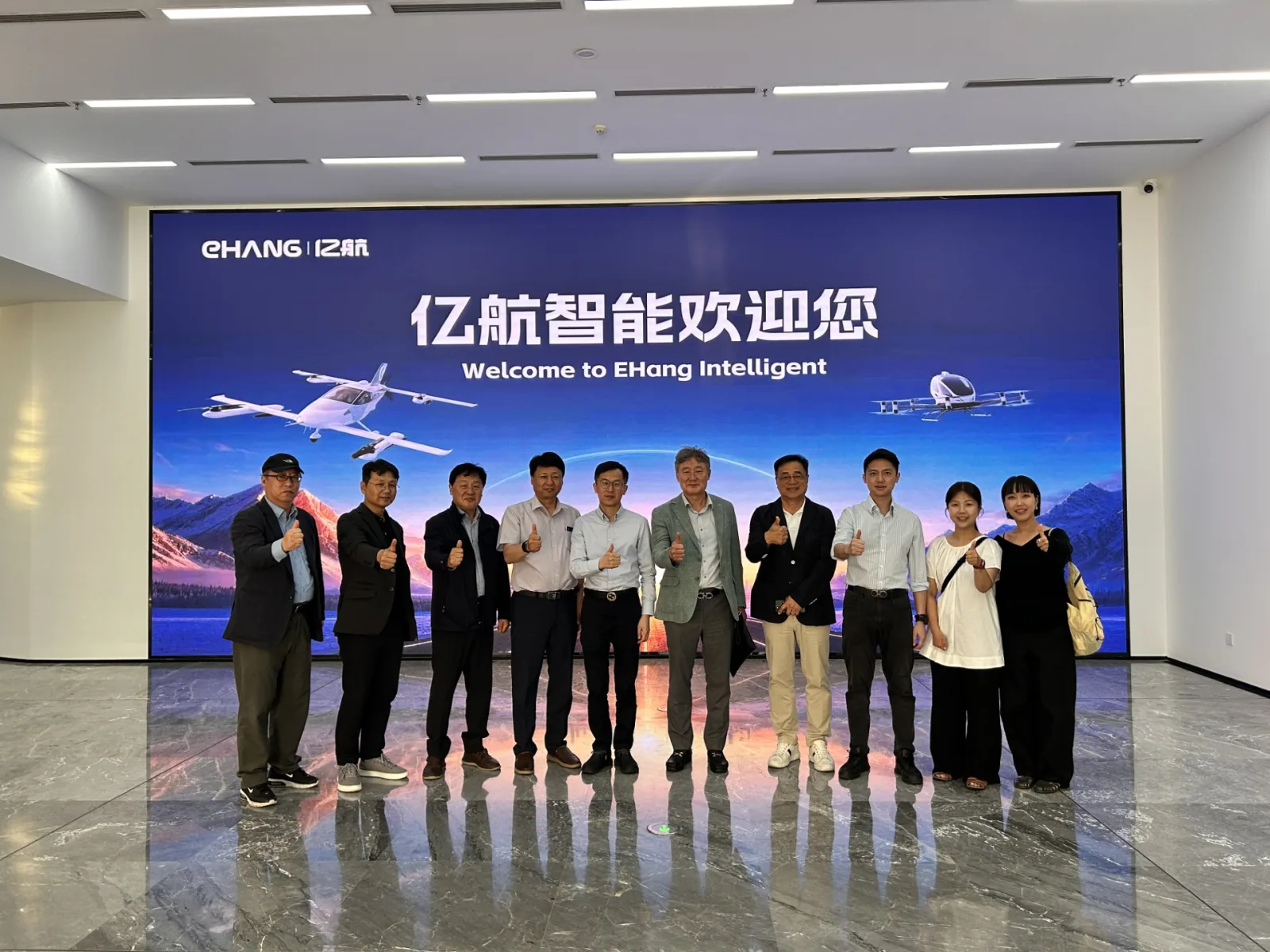
“Welcome to EHang Intelligent.” The screen lit up as we walked in, two of their aircraft gliding across it — one with wings, one a compact multirotor. We had flown into Guangzhou to stand in front of that screen, and to ask a very practical question: what does a university need to teach if it wants to prepare students for an industry that is still being invented?
Our delegation from Cheju Halla University came here as part of our Anchor program, the talent-development engine of Jeju’s RISE initiative. We are designing a new aerospace and autonomous-flight direction for the university, and rather than guess at what that curriculum should contain, we wanted to see the future from inside one of the companies actually building it.
Standing Beside an Aircraft That Flies Itself
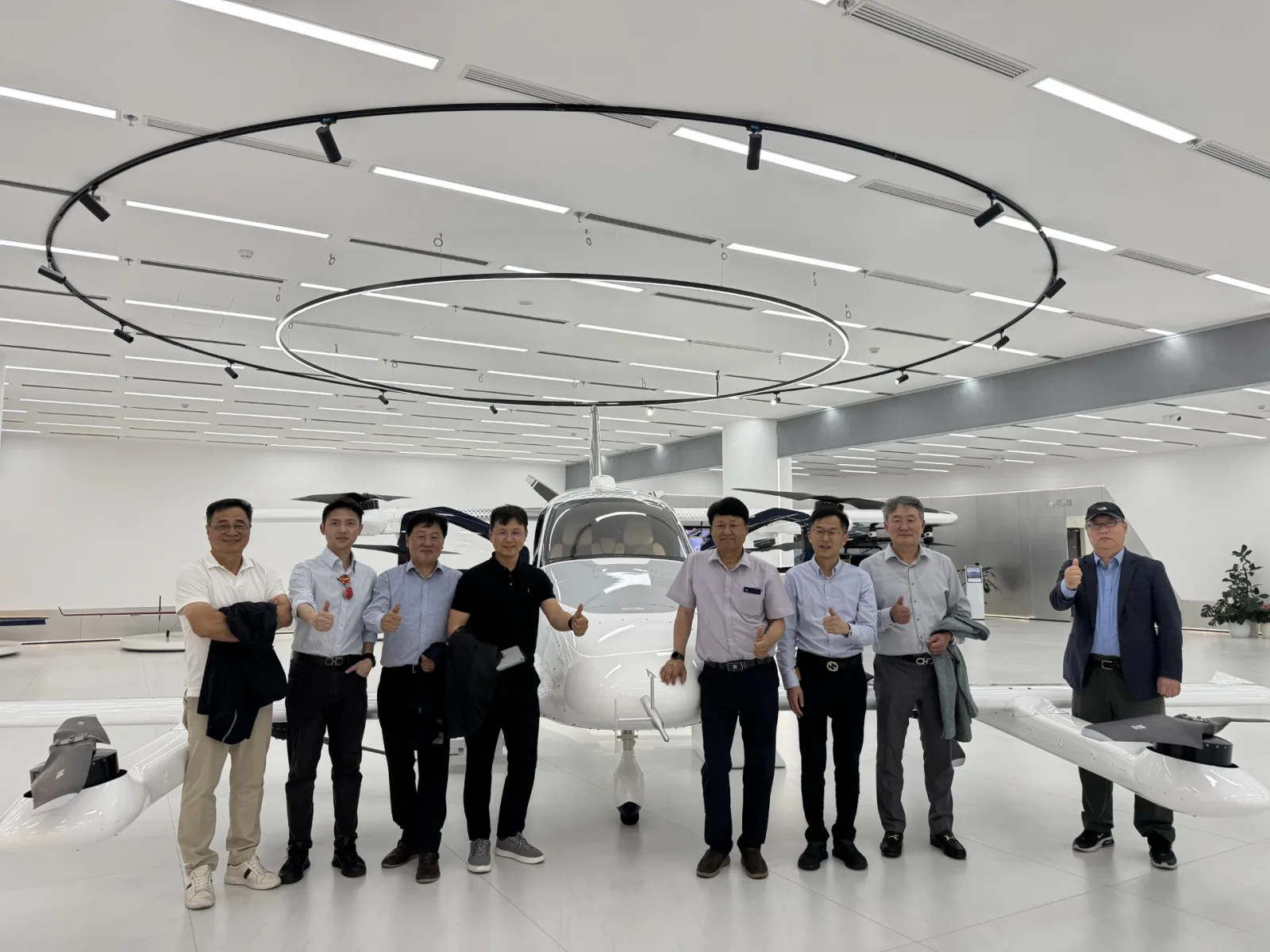
EHang is one of the world’s leading developers of autonomous aerial vehicles — pilotless, passenger-carrying aircraft for Urban Air Mobility (UAM). You read about eVTOLs and “flying taxis” in the news for years before you understand them. Standing next to one is different.
In their showroom we walked around a sleek white airframe, close enough to touch. No cockpit clutter, no controls for a human pilot in the way you’d expect. These aircraft are designed from the start to fly themselves, with the longer-range winged models parked beside the smaller multirotors. It is one thing to teach “autonomous systems” as a slide in a lecture. It is another to put your hand on a wing and realize the pilot’s seat has quietly disappeared.
When It Actually Lifts Off
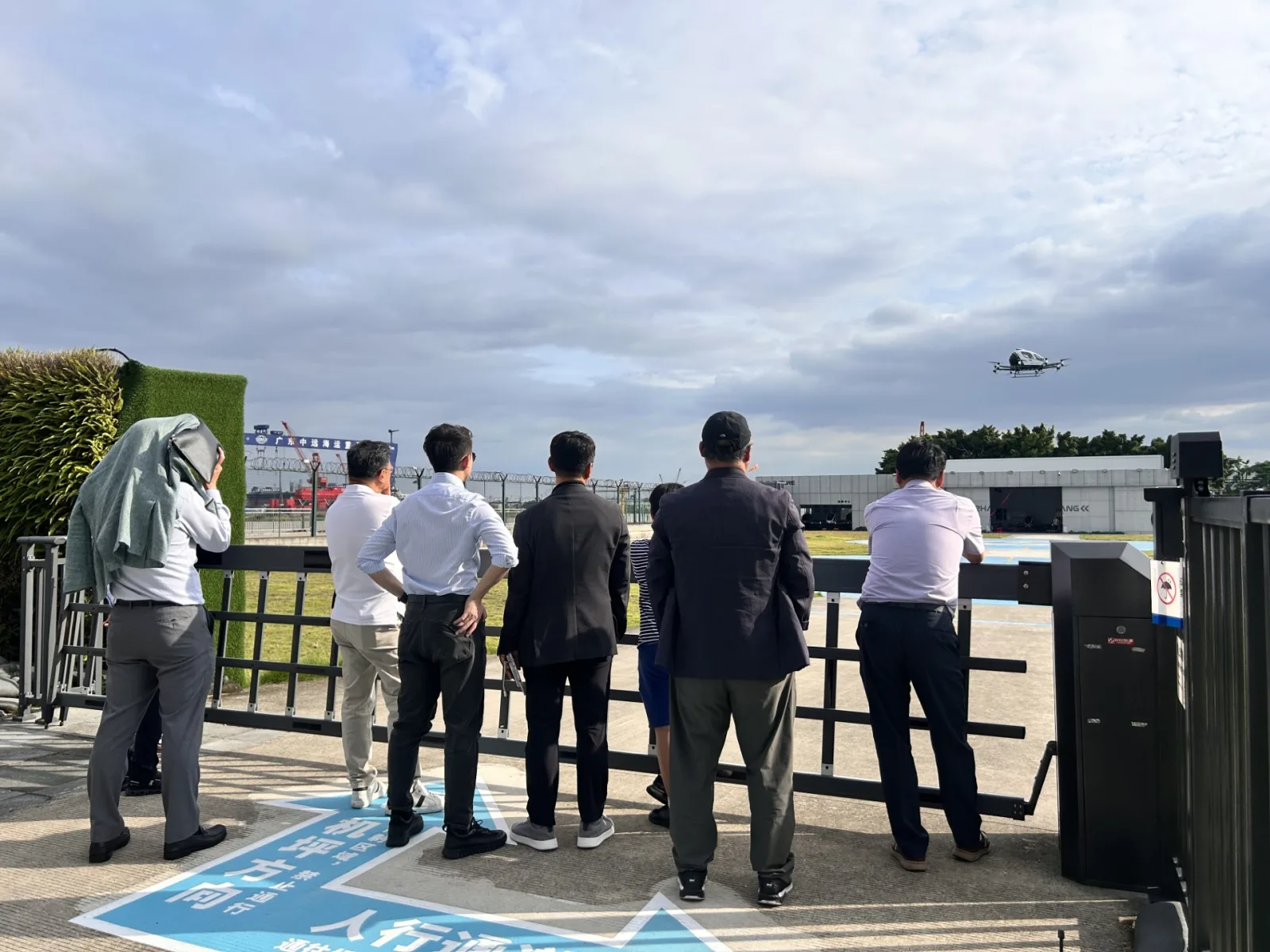
Then they flew one.
We stood at the edge of the test pad and watched an autonomous aircraft rise off the ground, hold a clean steady hover against a grey Guangzhou sky, and move with a calm that felt almost ordinary. No pilot. No nervous correction. Just software, sensors, and a flight plan, doing exactly what they were told.
I have spent my career around AI, and I still felt it in my chest. This is what the convergence of AI, data, and autonomous flight looks like when it leaves the lab — not a demo reel, but a real machine carrying its own decisions into the air. For our students, this is the gap we have to close: the distance between understanding an algorithm and trusting it to fly.
The System Behind the Flight
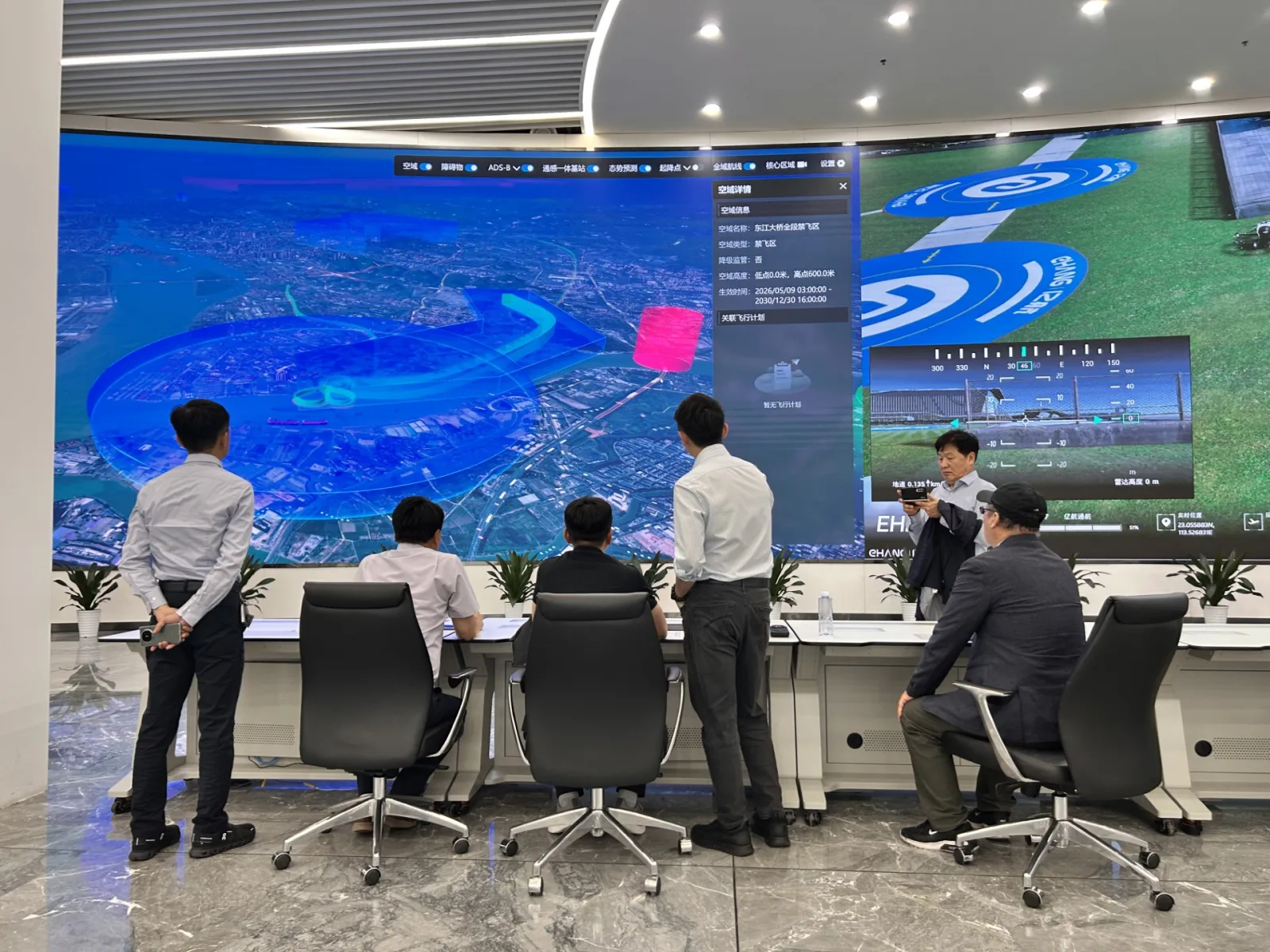
The aircraft is only the visible part. The part that surprised me most was the integrated control center.
A wall of screens tracked flight paths laid over a city map, telemetry streaming in from aircraft in real time. Watching it, the lesson was obvious: autonomous flight is not mainly an aviation problem. It is a data, operations, and safety problem. The hardware gets the attention, but the discipline lives in the monitoring systems, the certification, the operational rules, and the people who keep all of it accountable.
That reframed how I think about the curriculum we are building. We cannot just train people to build aircraft. We have to train people who can operate, monitor, certify, and manage entire autonomous systems — the layer that makes any of this safe enough to put over a city.
From Guangzhou Back to Jeju
The real purpose of the trip was the conversation that happened around all of this: how to design a new aerospace department and a jointly developed curriculum with a partner who lives at the front edge of the field.
We talked through the parts that matter most:
- Industry-driven content — a curriculum shaped by the actual demands of autonomous flight and UAM, not by what is easy to teach.
- Practitioner-led design — bringing industry experts directly into the courses, so students learn from people who ship.
- A program that keeps moving — a course structure that can respond to global technology trends instead of freezing the moment it is approved.
For Jeju, this connects to a bigger ambition: building a mega-regional aerospace and future-mobility ecosystem, with our students at the center of it. A visit like this is not the finish line — it is the groundwork. The point was never just to tour a company. It was to start a real, working partnership with a global leader and to give Jeju’s next generation a credible path into one of the most exciting industries of the coming decade.
We came home with more than photographs. We came home with a clearer picture of the engineers, operators, and decision-makers we need to grow — and a partner serious about helping us grow them. I intend to keep widening that ground with global companies like EHang, one honest conversation at a time.
The future of flight is quieter than I expected, and much closer. Now the work is making sure our students are ready to fly it.