The lights went down, and the screen at Lotte Cinema Jeju Yeon-dong filled with the title of a film that did not exist a year ago in any form we would have recognized. “I’m POPO.” Billed as Korea’s first 100% AI-video feature film. I was sitting with twenty students from our Department of Broadcasting & Film, the director who made it, a film critic, a policy advisor, and the governor of our province. And for a few minutes, none of us were talking about AI. We were just watching a movie in the dark.
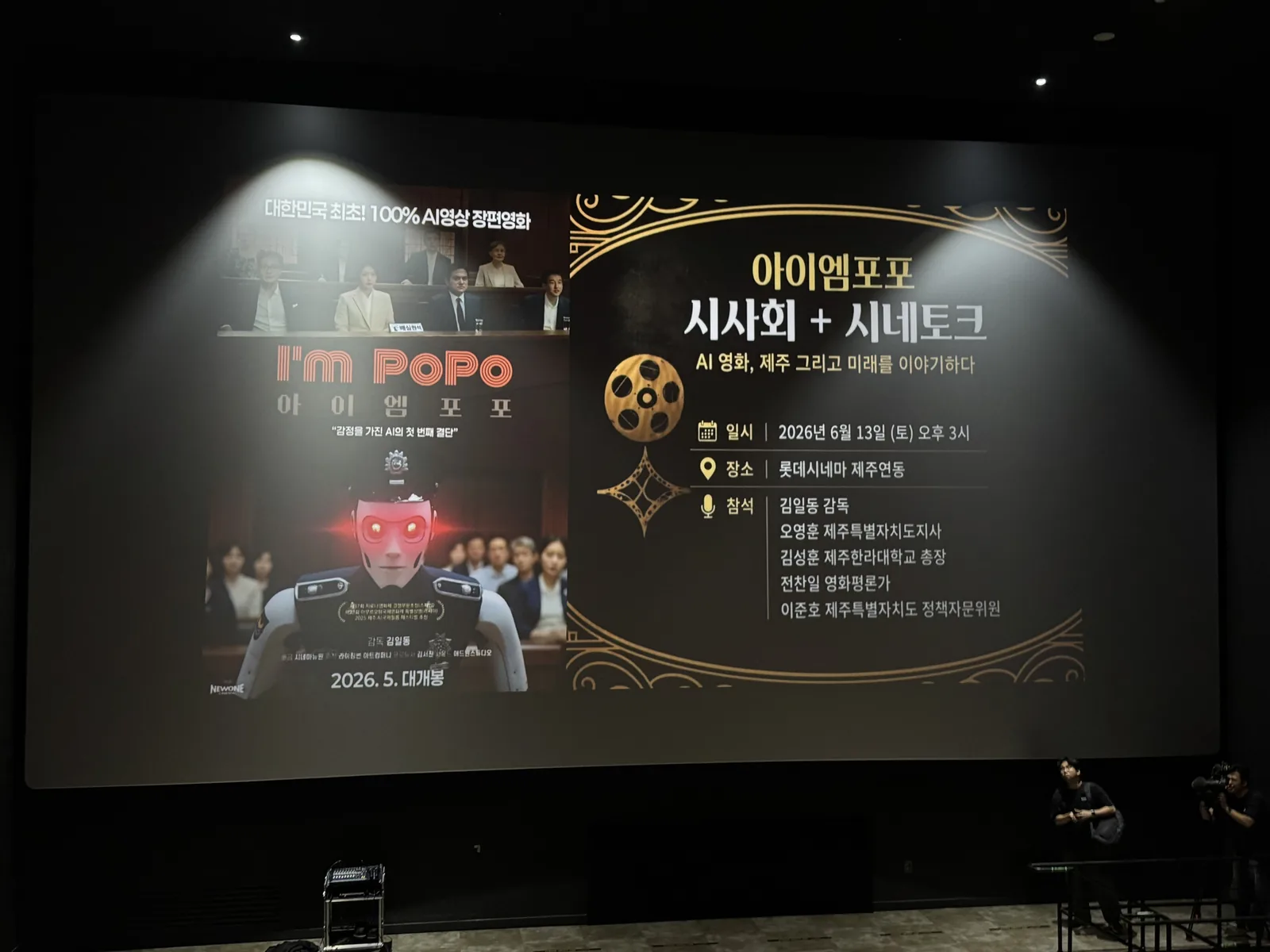
This was the event we called “AI Film, Jeju, and the Future of Content,” held on the afternoon of Saturday, June 13, 2026. Our Anchor program — the core-talent development arm of Jeju’s RISE initiative at Cheju Halla University — hosted it: a preview screening of “I’m POPO,” which opened in theaters in May 2026, followed by a cine-talk. I came as Vice President of the university, but mostly I came to watch the students watch.
The Gap Between Reading and Sitting
I have read a great deal about AI film. The pipelines, the model names, the debates about what counts as authorship now. You can follow all of it from a desk and feel reasonably current.
Sitting in the seat is different.
There is a moment, watching a feature-length story built entirely from AI video, where the technical question quietly recedes and the ordinary one takes its place: do I care about this character, am I following this scene, did that land. The film either holds you or it does not, the same as any film. What struck me most was not how the images were made. It was how quickly the making stopped mattering once the story started working. That gap — between knowing about AI film and sitting through one with people who care about it — is the thing no article had given me.
The Conversation After the Credits
When the lights came up, we moved into the cine-talk. The film critic Jeon Chan-il led the session as our guest lecturer, and the panel filled in around him.
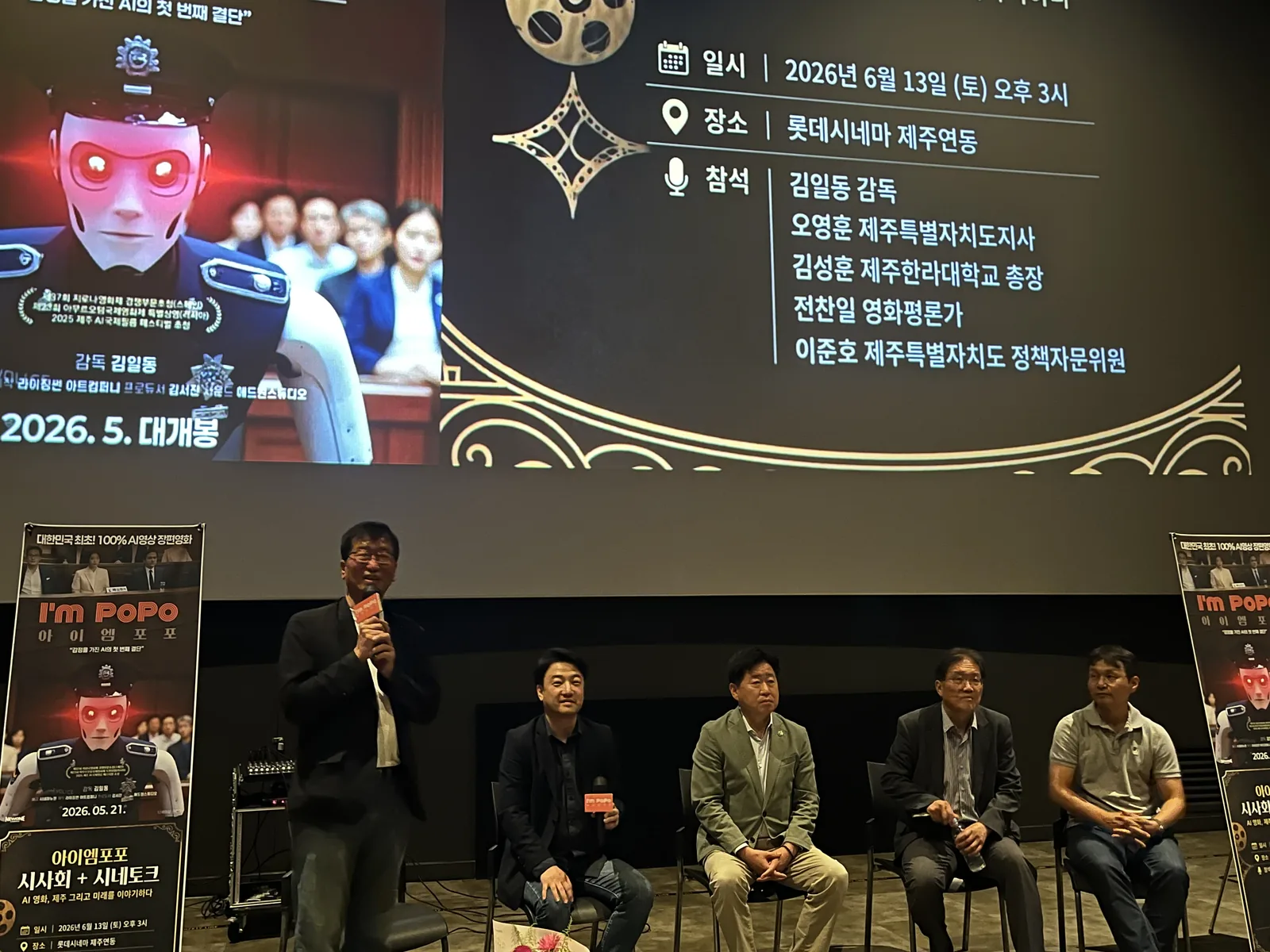
Director Kim Il-dong, who made “I’m POPO” and teaches as an adjunct professor in our Department of Broadcasting & Film, spoke about the thing he most wanted to prove: that creative work could be consumed in a real market and have the rewards flow back to the people who made it. A virtuous cycle, not a novelty. He said it mattered to him that this was possible here, in Jeju.
When my turn came, I talked about what we have been quietly building through the Anchor program — AI film-festival support, AI content-production education, and nationwide AI video-production camps for university faculty and students. The model we keep returning to is simple: faculty and students learn together, and then carry what they learn outward. I have taught long enough to be skeptical of you-can-do-it-in-a-weekend claims. But the timeline here was real, because the tools have changed what a beginner can reach: in a two-night, three-day camp, participants with no prior AI-video experience walked out with finished films. Not exercises. Films.
Governor Oh Young-hun framed the larger picture — Jeju building a new content ecosystem that links culture, tourism, and education through its AI digital-transformation policy, and a commitment to keep making space where creators can take real risks and grow. Lee Jun-ho, a provincial policy advisor from the video and VFX field, was there too, grounding the conversation in the craft side of the industry.
What We Kept Coming Back To
For all the talk of how fast the technology is moving — and it is moving very fast — the discussion kept settling on the same point. The tools are not the story. Creative storytelling is. Human expertise and craft are. AI lowers the cost of producing an image; it does not lower the cost of having something worth saying. A camp can teach someone the pipeline in three days. It cannot teach them, in three days, why their film should exist. That is judgment, and judgment is slow to build.
That is the line I want our students to sit on the right side of.
What Comes Next
Jeju’s plan is to grow outward from the AI film festival into AI-creator training, content-production support, and links to the tourism and culture industries — an industry, academia, and government collaboration aimed at a regional AI content-creation ecosystem and the people who can sustain it.
I keep thinking about those twenty students in the dark. A year from now, some of them will have made films of their own with these tools. The work is making sure that when they do, the tools are the easy part, and the story is theirs — and that Jeju is ready to watch.