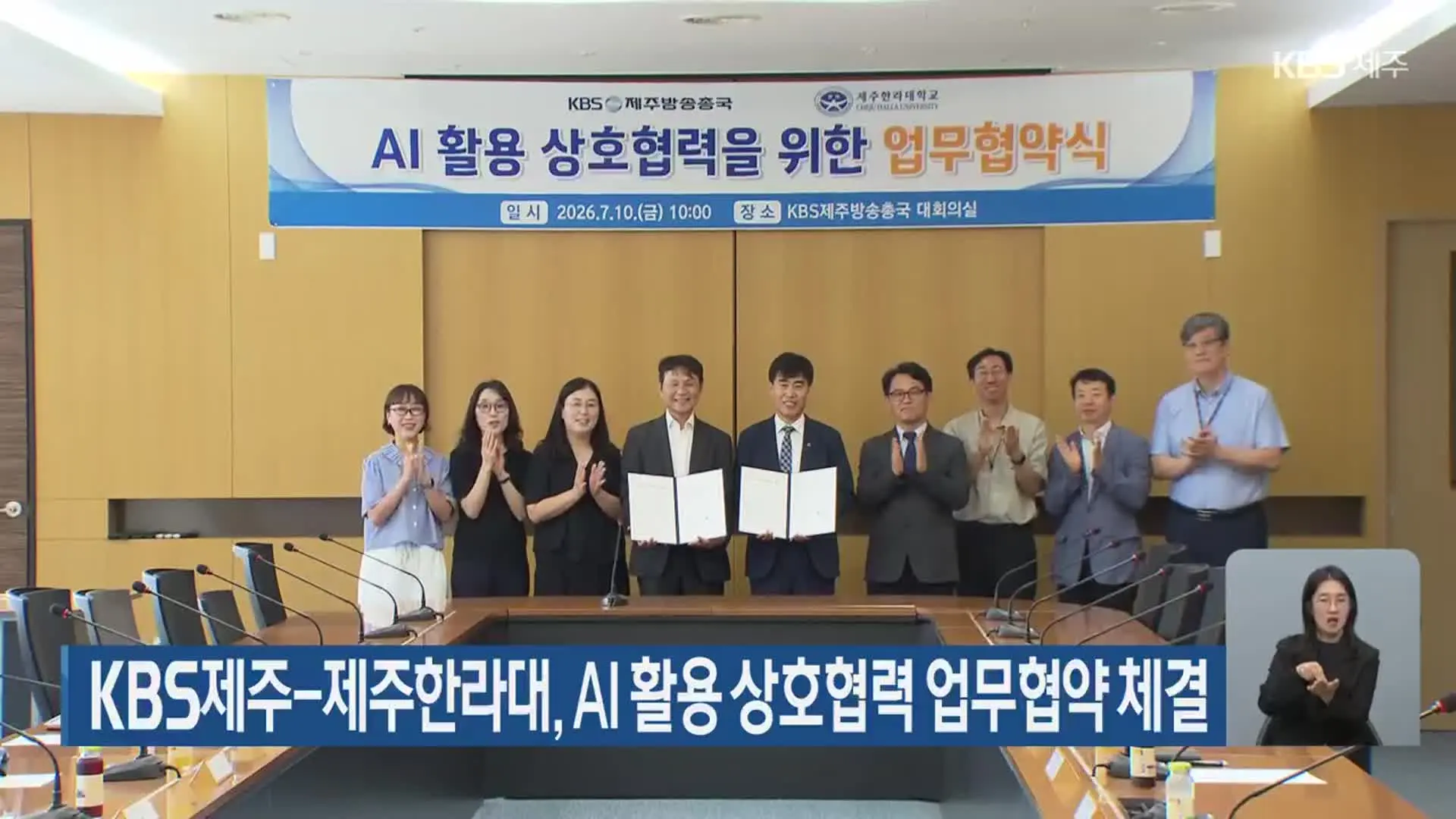
On Friday morning I signed an AI cooperation agreement with KBS Jeju, standing in for our president, who couldn’t be there. Photos, folders, a banner.
But the part that mattered had already happened. We signed in July because of what we did in May.
For the June 3 local elections, KBS Jeju and my team built the Jeju Election Reporting Center, the first time a Jeju news organization put AI into election coverage. I’ve written about what we built and where it falls short. Nobody planned it as a pilot for anything; it was a deadline, and elections don’t move.
A deadline is a good interview. What I learned about KBS Jeju is that they never once asked the AI to be more confident than it was: every district summary went through editorial review, and when a reporter said the model had misread something, the model lost. What they learned about us is that we kept saying no. No prediction engine, no candidate scoring, no recommendation layer.
What we signed on Friday is a framework, not a contract: six areas of cooperation, three years, automatic renewal, no money. The areas are broadcast coverage of our department, co-developed AI platforms, problem-solving AI for local issues, internships, and joint research.
The internship clause is the least impressive-sounding and the one I care about most. The election project worked because a few journalists learned the system’s failure modes well enough to distrust it correctly, and a few of my students learned enough about broadcast deadlines to build for them. That knowledge lived in about six people’s heads. Internships are how it stops being six people.
Park Jong-in, head of KBS Jeju, hoped the day becomes a working model for the region’s media industry. I said I hoped the collaboration would help with the problems Jeju actually has.
Here’s what’s behind that. Our university is part of RISE, Jeju Province’s regional innovation program, and one of its mandates is solving local problems. We are decent at solving and structurally bad at finding. A university has no way to hear what a village across the island is worried about; we have surveys and good intentions, and both tell you what you already thought to ask. KBS Jeju has reporters in those villages. They draw the local voice up; we analyze it into something that resembles a solution.
A signed MOU is a photograph, not a system anyone uses. The honest measure is a year from now: did anything ship that a Jeju viewer noticed?
We earned this agreement by doing the work before it existed. The only way to keep it from becoming a framed certificate is to keep doing the work after.
→ Watch the KBS report → Visit the Jeju Election Reporting Center