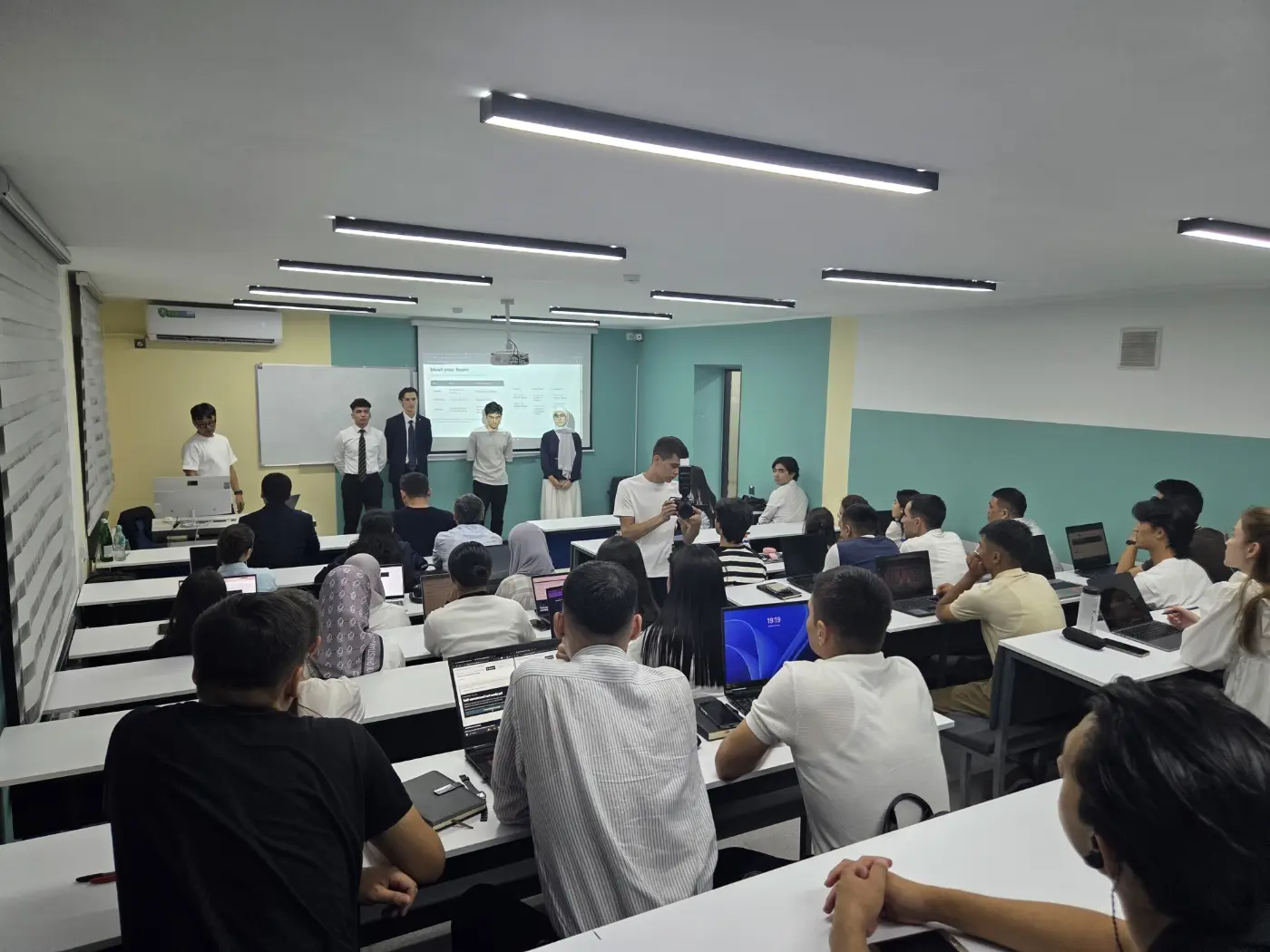
The third cohort of our KOICA-TIU-Cheju Halla AI Training Center began the way most of its classes will run: after the working day, in the evening. On Tuesday, September 8, students filled Room 411 in Building B of Tashkent International University (TIU) at 18:30. By 21:00 most of the room was set up on the tools it will use for the next twelve weeks.
From 774 Applications to 45 Seats
774 people applied for this cohort, and 45 were confirmed. That ratio says something about the demand for practical AI education in Uzbekistan. It also puts a responsibility on us: a seat here was hard to get, so the hours spent in it have to be worth it.
The cohort runs on education grants: free for students, with KOICA covering the costs.
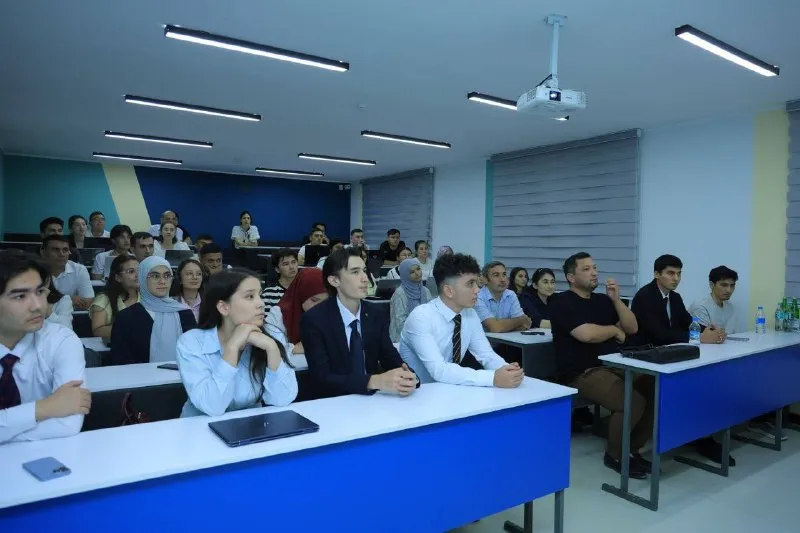
What They Will Study
The structure is simple and weekly:
- Tuesday: Azure AI Fundamentals (AI-901), two sections, required for everyone
- Wednesday electives: Generative AI & Prompt Engineering or AI Engineering / MLOps
- Wednesday special lectures: twelve short sessions by industry practitioners, Xurshidbek Kurbanov (Bek) of InFocus Labs and Mamur Djurayev of Nomadian, in alternating weeks
Both lecturers’ companies signed cooperation MOUs with our university during the same trip. I wrote about those agreements in a separate post.
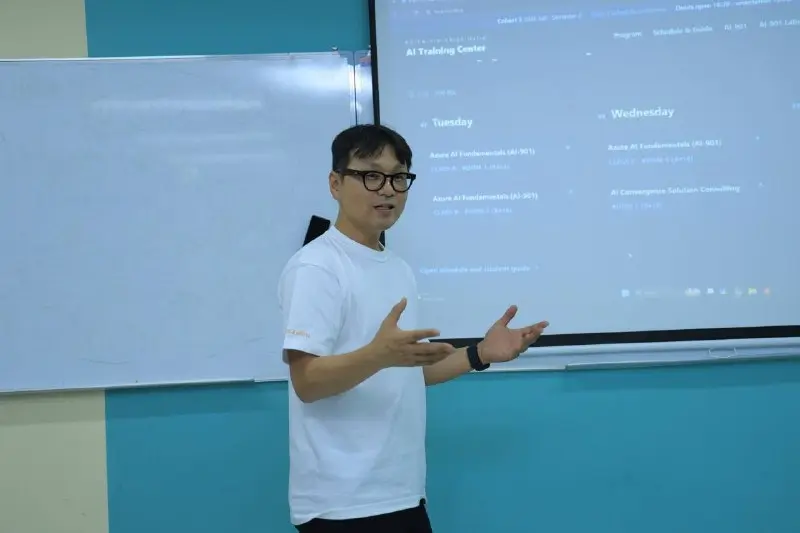
An Orientation You Do, Not Watch
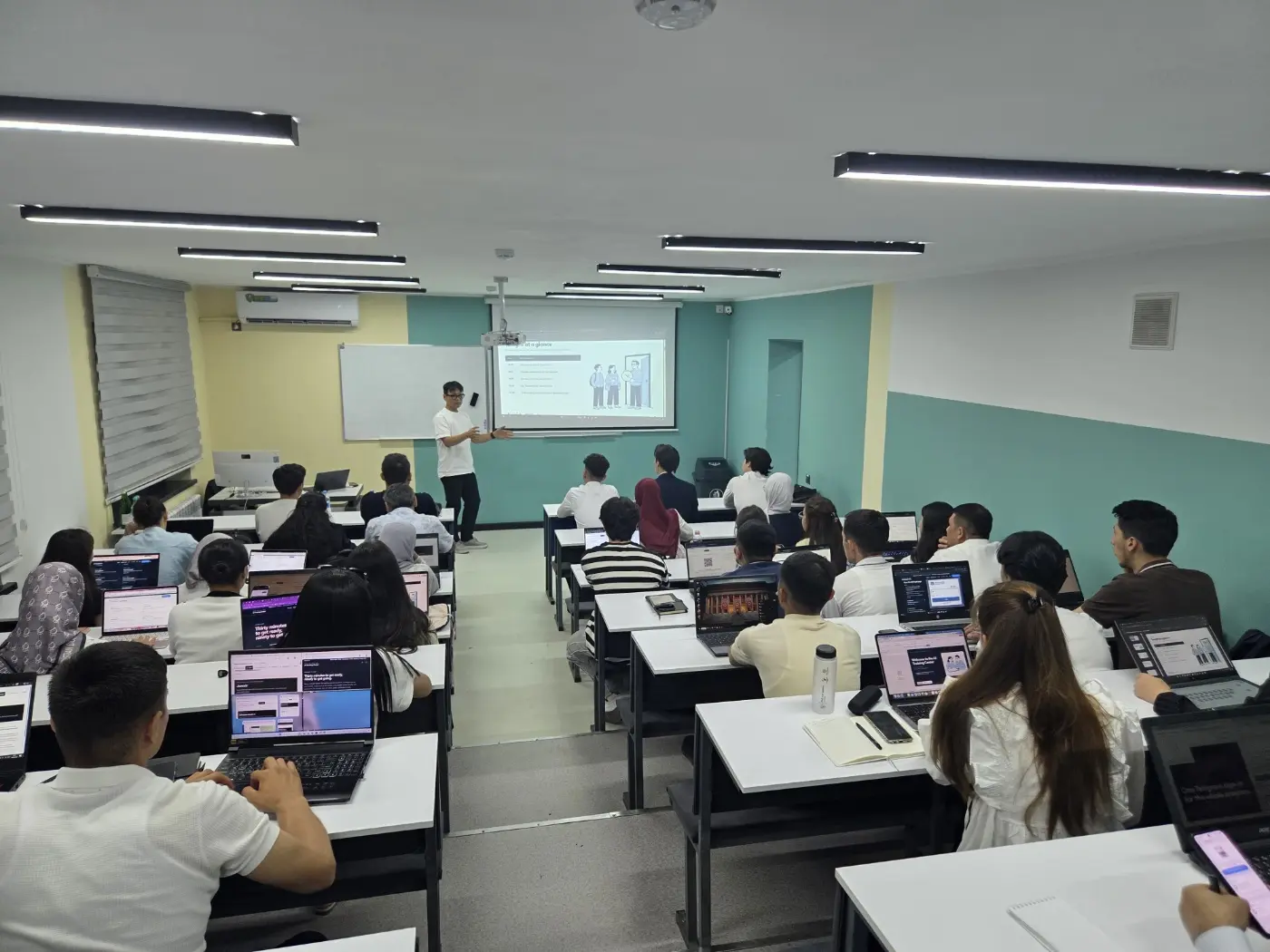
We stayed in one room for the whole evening. The first half hour covered the welcome, the program, the timetable, exam dates, and the final choice of electives. The rest went to doing it together: students opened the course hub, took the first practice test, learned how their Azure practice accounts will work, walked through the learning platform, and joined their class channel, while we answered questions and fixed problems as they came up.
The reasoning is practical. The first weeks of any course lose people to small frictions, a forgotten password or a missing link. Solving those on day zero, with tutors and staff in the room, is far cheaper than solving them in week three.
Four Tutors, All Trained With Us
Each class has its own tutor. Four tutors were selected for this semester, and all four came up through the center’s own programs. Two of them are Cohort 2 alumni who earned their Azure certification with us in June. This spring they sat in these rooms as students; this fall they are helping run them. That is the result I care about most, because it is the one that stays in Tashkent.
The Road to November
- AI-901 exam windows: October 19-23 and November 16-20
- Hackathon and completion ceremony: Saturday, November 28, in teams of five
- Completion: at least 75% attendance, a grade of D or above in both courses, and the midterm and final tests
Cohort 1 finished last year; Cohort 2, which opened Year 2 of the center in March, finished in June. Each cohort has taught us something about running the next one, and this orientation was built on those lessons.
Forty-five seats, four tutors, and one long evening: the third cohort is underway, and more of it is being run by people from Tashkent.